Research projects
Our research takes advantage of the powerful genetic versatility of the Drosophila melanogaster model system. Aided by single-cell transcriptome atlases, a full connectome, and a variety of powerful behavioural assays, we aim to dissect neuronal mechanisms with unparalleled resolution. Here are some of the projects that we are currently working on.

Transcriptional control of learning and memory.
We are interested in transcription factors expressed upon neuronal activity, and their role in memory and plasticity. We use transcriptomics and chromatin profiling methods to address changes in gene expression that arise during the formation and consolidation of long-term olfactory memories.
Molecular regulation of state-dependent behaviour.
We investigate how the brain drives changes in food preference under unbalanced diet. We are exploring the neuronal pathways and mechanisms that cause these shifts in dietary choices, aiming to understand key pathways responsible for the state-dependent processing of sensory signals. For this, we use live tracking of food consumption, and single-cell transcriptomics to address changes in gene expression in specific neuronal populations. Our research aims to reveal important insights into feeding behaviour and nutritional health.


Dopamine dynamics at the synapse.
Prompted by our recent discovery of dopamine transporter (DAT) expression in a population of non-dopaminergic neurons, we explore how dopamine transport shapes neurotransmission at dopaminergic synapses to influence the balance between learning and forgetting, and signal specificity during memory recall.
Our methods
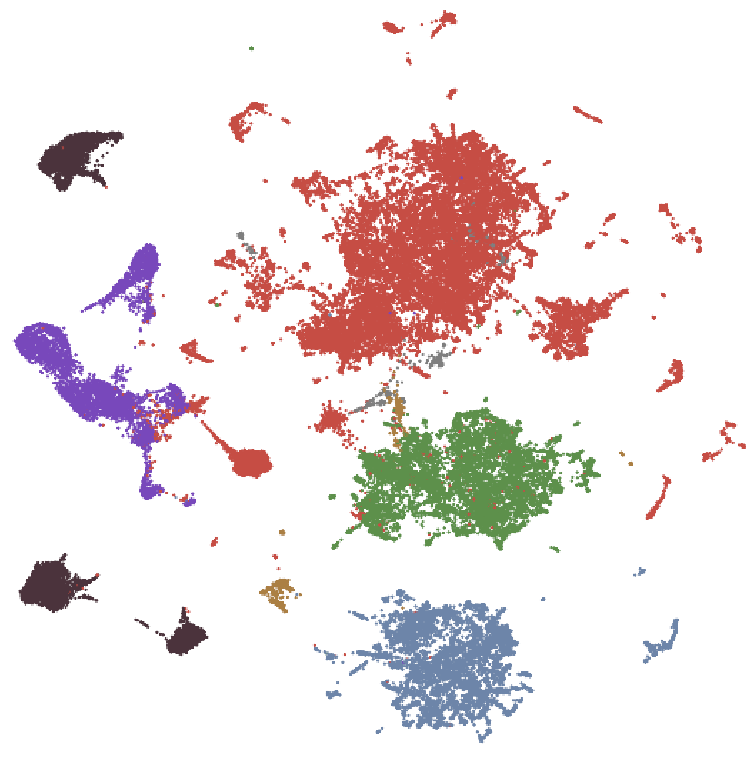
Single-cell transcriptomics
By enabling gene expression profiling in tens of thousands of individual cells in a single experiment, single-cell transcriptomics has revolutionised life sciences research. We couple these methods to fluorescent cell sorting to address changes in gene expression in very small neuronal populations across the Drosophila brain. We work with Newcastle University’s Genomics Core Facility to perform our RNA-sequencing experiments.
Behaviour
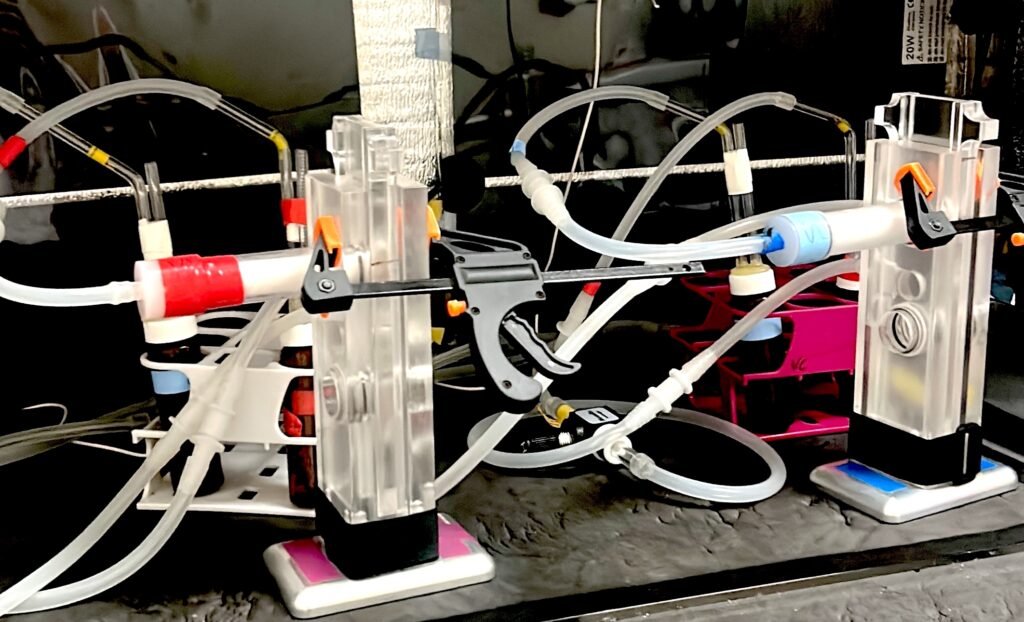
We own state-of-the-art equipment to quantify a large palette of behaviours, include learning and memory, food choice and consumption, sleep and circadian rhythms or locomotion. We are always interested in optimising our assays to quantify behaviour with the highest possible resolution.

Neuronal imaging
We use the microscopy equipment from Durham University’s Bioimaging Facility to reveal details of brain anatomy and track molecules of interest.